September 2, 2026 · Johannes Brauner, Founder & Creative
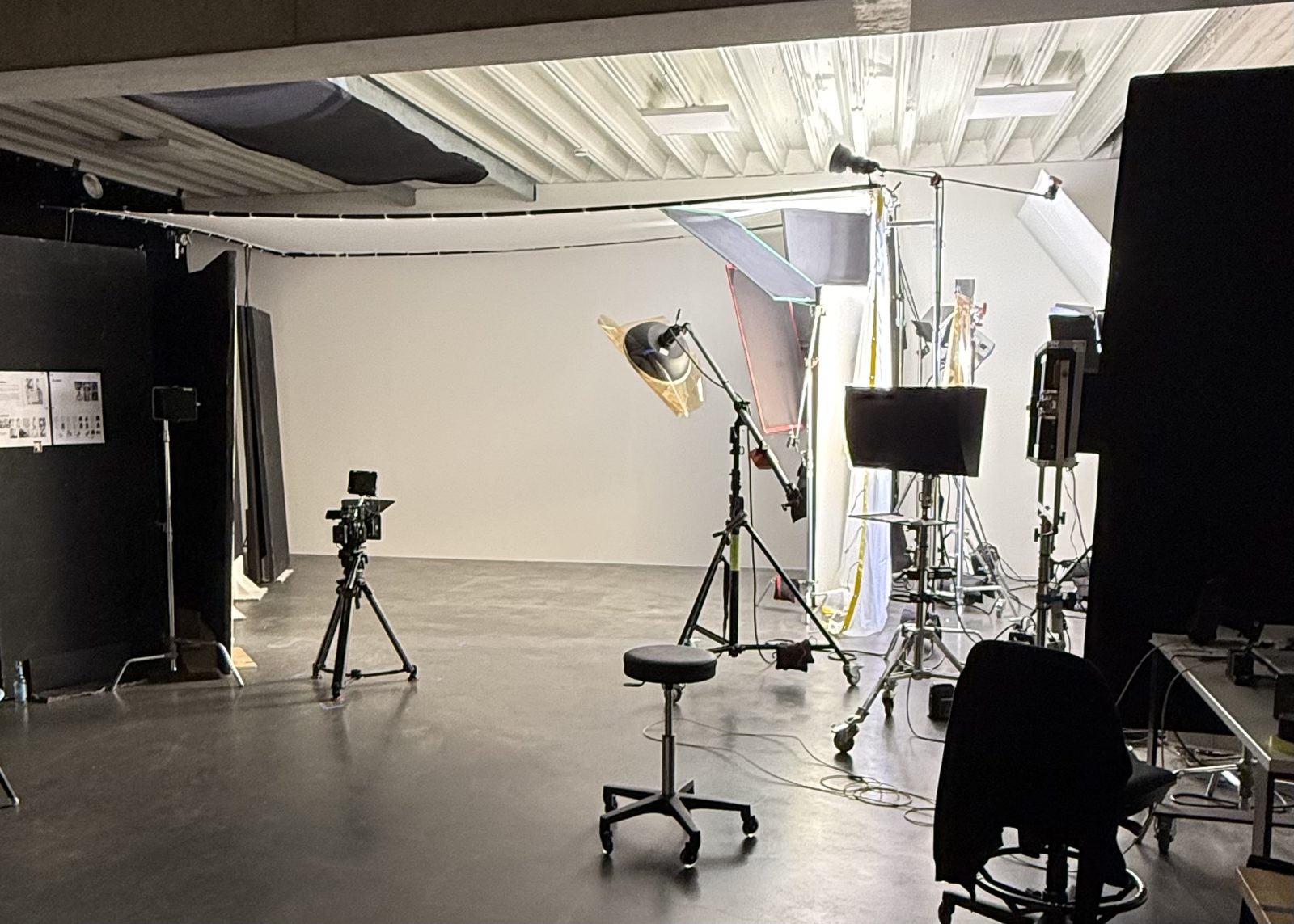
When I started, I did what you are supposed to do: I applied to photographers for a permanent assistant position. It went nowhere. Today I know why — almost nobody keeps a permanent assistant anymore, and the few who do choose very carefully.
What worked was something else. A content studio for a fashion label took me on, first on probation, to see what I could actually do. Two photographers worked there. Between shots you get talking, and you can ask the questions nobody writes down. That is still how this works: you get into a studio, and in the right room you meet the right people.
Alongside that I assisted. On my days off, on weekends, on test shoots — registered as a business, for a year. Everything I know about this job started there.
This is the guide I wish someone had handed me. What to do first, what it really costs, and what I would do differently.
Start here, not at the tax office
The first three things have nothing to do with any authority.
First
Do the research properly
Take a few days. Read. Ask friends who already do this. Message people on Instagram or TikTok and ask whether you can assist — everyone in this industry needs assistants, and that is still the best way in.
Second
Assist — including for free
I assisted unpaid for a long time, deliberately. It takes time, energy and your own money — and it is the only honest way to find out whether you actually want this before you cut into your life for it. It also takes the pressure off both sides: nobody expects a finished professional from someone who is there to learn. Travel for it if you can. I would not trade that time for anything.
Third
Start filing from day one
A clean folder structure, every document sorted the moment it arrives. It sounds boring and it is the thing you will thank yourself for. When my accountant messages me for a receipt, I send it from my phone on set in two minutes. Receipts and invoices have to be kept for eight years in Germany — annual accounts for ten.
Registering itself is cheap. The tax office questionnaire costs nothing, and the trade registration is roughly 20–50 € depending on your municipality — you are paying for the office's work, once. All in, from the small-business VAT rule through to a full trade registration, you will stay under 100 € one-off.
Being self-employed is what costs. A bank account, an accountant, and above all time you will not spend making pictures. Go into it deliberately.
The first professional you hire is a tax advisor
If you take one thing from this: get a tax advisor before you register anything, and find one who understands creative work.
I found mine through the networks that existed then — magazines, forums, listings of accountants working with photographers. Today you can research most of it online, but the honest answer is that a recommendation from someone in your field beats any search result. Ask the people you assist for.
The reason it matters that they know creatives: a bookkeeper who spends their days on retail will want to book accounts for things that, in photography, are flat rates. You want someone who already knows what a shoot day, a usage fee and a kit rental look like on paper.
What it costs, from my own invoices:
- Around 60–100 € a month while you are under the small-business VAT rule
- 120–150 € a month in my first year on standard VAT — I know people who paid less
- 70–140 € a month is a realistic range for a freelancer or small business
Most people start with quarterly bookkeeping and move to monthly once the receipts pile up. Two things worth doing at the first meeting: negotiate, and ask straight away what the annual accounts will cost on top. That number surprises people at the end of the year.
Tell them early if your revenue is going to land far from what you projected. It can be corrected before anything is filed. If you have no idea what to project, our day rate calculator is a starting point.
Freiberufler or Gewerbe — the fork everything hangs on
Every guide tells photographers they are Freiberufler under §18 EStG: artistic work, no trade tax, no chamber of commerce, no trade office. I am a photographer and a DoP, and I am registered as a Gewerbe.
That is more common than the guides suggest. The courts want genuine creative authorship at a certain level for the freelance classification. Commissioned work with a craft character — weddings, portraits, product, real estate — is usually classified as a trade. The nuance most articles miss is that the Federal Fiscal Court has said the commercial purpose alone does not decide it: work made for advertising can still be artistic. What counts is the creative authorship, and evidence like artistic training, exhibitions, prizes or published work supports it.
In my case nothing was ever argued or decided. There was no meeting, no letter, no discussion. It just drifted that way.
And honestly: the fear of trade tax is misplaced. The first 24,500 € of profit are exempt. Above that, trade tax is credited against your income tax under §35 EStG — fully neutral up to a municipal rate of 400 %. Cities set their own rate, and in the higher ones a small residue remains. That residue is what I actually pay. Chamber of commerce fees also fall away entirely while your trade profit stays under 5,200 €.
If you are starting out, this decision will almost certainly cost you nothing either way. Do not let it paralyse you.
The one form
Within one month of starting your activity you have to file the Fragebogen zur steuerlichen Erfassung with the tax office (§138 AO). Since 2021 it is electronic only, through ELSTER. The clock starts with the actual start of work, not your first invoice.
Out of it comes your tax number. It usually takes two to six weeks — and until you have it, you cannot write a proper invoice. Plan for that gap.
The small-business VAT rule, and the trap in its name
Since 2025 the thresholds are 25,000 € in the previous year and 100,000 € in the current one. Both have to hold. And there is a change people miss: if you break the 100,000 € mid-year, the status ends immediately, not at year end.
Now the part that cost me real time.
The mistake I made
You do not have to re-register anything
When I moved to standard VAT, I deregistered my business and registered a new one. That was unnecessary and it made a mess. Switching is nothing more than a declaration to the tax office — your trade registration is untouched. I did it because two German words get confused constantly, including by me.
Kleinunternehmerregelung is a VAT rule (§19 UStG): you charge no VAT and you reclaim none. It applies to freelancers and trades alike.
Kleingewerbe is something else entirely — a trade that is not entered in the commercial register. It is not a legal form, but it is a real category; the chambers of commerce use the term officially when they exempt small traders from fees.
I was both at once. Knowing that would have saved me the whole detour.
On equipment, this is the decision that actually costs money. Under the small-business rule you cannot reclaim the 19 % VAT on a camera, a lens, a light. On a 15,000 € kit that is roughly 2,400 € gone. So my advice: save, and plan the purchase for after the switch. One, two, sometimes three years of putting money aside — then invest once you are on standard VAT.
Two corrections to my own rule, because they matter:
The purchase is not worthless before the switch. It still reduces your profit and therefore your income tax. What you lose is only the VAT.
And if you already bought: you may get part of it back. Switching to standard VAT within five years of the purchase triggers a correction under §15a UStG, and a proportional share of the VAT comes back to you — as long as the correction exceeds 1,000 €. On serious equipment that is quickly a four-figure sum. Ask your accountant about it specifically; it is rarely offered unprompted.
One more thing before you switch: giving up the small-business rule binds you for five calendar years. Choose the moment, do not stumble into it. Looking back, I switched too early. I would have stayed under the rule longer and let it run to the point where standard VAT was genuinely unavoidable.
The Künstlersozialkasse
Personal opinion, not advice
This section is my own assessment and my own experience. The KSK is not compulsory in Germany, and plenty of people work well without it — I am one of them. Check it against your own situation.
The KSK covers roughly the employer's half of your health and pension contributions. For many creatives that is worth more than any tax trick. I am not in it.
The first reason is structural, and my accountant put it plainly: assisting does not qualify. The KSK is tied to genuinely artistic work, and an assistant provides a service rather than working from their own authorship. Gaffers and grips have real skills, but those job titles barely exist as recognised professions in Germany — internationally they do — so they end up filed as assistants. Hair, make-up and styling have a much easier time getting in.
The second reason is personal. Early in my assisting years it simply did not feel like where I belonged. Later it became financial: KSK contributions scale with what you earn. The faster you grow, the more you pay in — and I did not want that. The same logic took me into private health insurance.
The third is about this country's reality: most of us here work for the commercial world, not the artistic one. If you genuinely work artistically, this is a different decision entirely.
For balance, the numbers you should weigh against my view: the minimum annual income is 3,900 €, unchanged for 2026 — but in your first three years that minimum does not apply at all, so beginners can get in while earning almost nothing. And the KSK really does pay about half. Being registered as a trade does not automatically disqualify you either; the KSK assesses artistic activity independently of the tax office.
Health insurance, briefly
My own view is that once you earn properly, private insurance or the KSK will save you a lot of money compared with voluntary statutory cover, where contributions climb with your income.
The counterweight you need before copying me: private health insurance is close to a one-way door. Premiums follow your age and health, not your income, and getting back into the statutory system as a self-employed person is very difficult. It is one of the few decisions in this list that is hard to undo — take it to someone who advises on insurance, not to a blog post.
The money that isn't yours
I opened a free business account with a neobank on day one. Across Europe there are several that cost nothing, and while you are small that is all you need. Later a proper bank becomes useful — for an overdraft line, for real credit cards.
Then the harder question: how much of what lands there is actually yours?
The standard advice is to move 19 % aside the moment an invoice is paid. I do the opposite. I pay myself a fixed percentage each month, like a salary, and everything else stays in the business account. That is what I have to run the business on. No shuffling money between accounts, and the number in front of me is the one that is really mine.
I have had back payments that caught me cold. So one thing worth knowing early, because it takes the panic out: you can come to an arrangement with the tax office. Deferral, skipping a month and paying the next — it is negotiable. Most people freeze instead of asking.
What I actually needed was simpler than any of that. Where do I stand right now? How much is outstanding? What is still coming in this year, and do I need to slow down before I cross a threshold? I tried several tools. They were all bookkeeping software built for retail — I come from that world and know it well, but in photography I never needed to book accounts for equipment. The question was never "how do I post this". It was "where do I stand".
One more deadline you already have
E-invoicing arrived in Germany quietly. Since 1 January 2025 every business here must be able to receive a structured electronic invoice — no exceptions, no transition. Issuing follows: from 2027 for businesses above 800,000 € turnover, from 2028 for everyone else in domestic B2B.
The line that matters for most people reading this: if you use the small-business VAT rule, you are permanently exempt from issuing e-invoices. You still have to be able to receive them.
France switched on its own mandate on 1 September 2026, which is why we wrote a separate piece about what that means if you invoice French clients. The formats converge — the XML inside a German ZUGFeRD file and a French Factur-X file are the same European standard.
Sources
Rules change; these are the places to check them rather than trusting any article, including this one:
- Fragebogen zur steuerlichen Erfassung via ELSTER — the registration itself
- Künstlersozialkasse — Voraussetzungen
- Kleinunternehmerregelung, §19 UStG — IHK Stuttgart
- Gewerblich oder freiberuflich? — federal start-up portal, on exactly this question for image-based work
This is my experience, not tax advice. Which brings me back to the beginning: find an accountant who knows creative work, and ask them everything on this page.
Where Agency OS stands
I built Agency OS because of the last section. Seven years in, the tools I could find still answered a question I did not have. I wanted to know what was confirmed, what was outstanding, and what I could actually spend — in ten seconds, on my phone, between shots.
It is not accounting software. It is the thing I reach for when a client calls to ask if I am free, and the thing that tells me, on set, whether I can afford the lens.